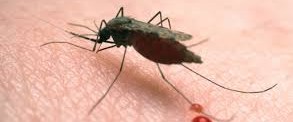
Malaria research during 2011

January 18th, 2012 by Bernt Lindtjørn

The Ethiopian Malaria Prediction System (EMaPS) combines information about weather and water with demographic data to predict mosquito development and malaria risk.

Climate variability and changes may influence socio-economic development in Africa by affecting human health through extreme weather events and by bringing about changes in the ecology of infectious diseases. Malaria is a major climate sensitive public health problem in Ethiopia. Unfortunately, there are no practical tools for predicting malaria epidemics based on weather and climate information. Such tools would be useful in making a more efficient use of the limited resources for malaria control.

The project is a collaborative multidisciplinary research project. Researchers from Ethiopia and Norway work together to develop and validate models for predicting malaria transmission and set up an early warning by combining information on climate, water, epidemiological and entomological data. By the end of the project period, EMaPS will try to provide an implementation approach for early malaria warning. The project also aims to strengthen research, and improve interdisciplinary research capacity in Ethiopia and Norway.

The project contains several disciplines (see figure).

The project combined new population-based malaria transmission data with climate and land use variability data to develop early warning to predict malaria epidemics in Ethiopia. Such information is useful for the public and public institutions about the risk of malaria transmission and thus prevents malaria-related deaths.

Overall, eight PhD candidates (six Ethiopians and two Norwegians) take part in the project. The NUFU project funds four of these students, and four are funded by the University of Bergen. They collaborate and share data between the project parts.

We completed the data collection in 2010. During 2011, we mainly focused on data analysis, write-up and publication of the study findings. We expect all PhD candidates to defend their PhD thesis in 2012, and their works are briefly described below.

Abebe Animut is studying malaria mosquitoes in the highlands. He has described the occurrence of Anopheles arabiensis at altitudes as high as 2200m. He has also described the risk of malaria transmission at varying altitudes between 1700 and 2200 m altitude. His study provides good evidence that malaria transmission often occurs in the Ethiopian highlands.

Dereje Tesfahun has evaluated how rainfall and other factors affect the flow of the major rivers in Ethiopia. He has used a model to assess how sensitive the flows of the major river basins are affected by the weather and by possible land use changes. His research shows that Ethiopian rivers are sensitive to precipitation with a 10% change in precipitation giving a 20-30% response in annual stream flow.

Diriba Korecha has studied seasonal weather forecast for Ethiopia. He has re-classified the climatic zones in Ethiopia, worked on models to improve seasonal weather forecasting and validated the result of 10 years of seasonal forecasting in Ethiopia. His research shows that seasonal weather forecasting in Ethiopia is difficult.

Adugna Woyessa has studied the prevalence and risks for malaria using prospective community-based surveys in Butajira in the south central Ethiopian Highlands. His study confirms that malaria is present at altitudes as high as 2200 m, and the malaria prevalence increases towards the lowlands. Malaria occurs throughout the year, but mainly after the main rains. One important finding is that he shows that malaria varies much between villages and within households at all altitudes.

Eskindir Loha studies malaria in the holoendemic Arba Minch area. One of his studies shows that models of climate-malaria link vary from place to place, and one model cannot fit all locations. Malaria modelling may need the inclusion of non-climatic causes. In a follow up study he shows that risk of getting malaria varies much both in time and space within villages. He now works on a paper to describe the influence on rainfall, temperature, socioeconomic factors on the incidence on malaria in these lowlands.

Fekadu Massebo is describing the association between resting behaviour, human blood index and entomological inoculation rates of Anopheles arabiensis in south Ethiopia. The studies include analysis on how mosquito density is associated with malaria cases and how it is influenced by temperature and rainfall. He also assesses insecticide resistance pattern, and if simple house screening will reduce risk of malaria infection.

Torleif Markussen Lunde works on the malaria prediction model. He uses information collected from several disciplines of our project. He has developed a validated malaria prediction model. In the coming months, he will produce malaria distribution maps for Ethiopia, and try to estimate how the new IPPC climate scenarios will affect malaria in the coming years.

Ellen Viste has used weather analysis to describe and analyse from where moisture to Ethiopia comes from.  The Indian Ocean, the Congo Basin and the Red Sea are important moisture source regions. The results suggest that most of the air – humid or not – that enters the Ethiopian highlands from the south has travelled through the Indian Ocean, by the African continent, reaching the Ethiopian highlands from the south-west, or through the Turkana channel.

Some conclusions:

The research will reach its research objectives by the end of 2012, and will have produced eight PhDs and over 20 master theses. Based on our experience we conclude the following challenges remain:

Research challenges include:

  • Improve seasonal weather forecasting for Ethiopia
  • Further develop and field-test malaria prediction in close collaboration with national meteorology and health authorities
  • Possibly add new disciplines such as studies on climate – food production and nutrition.

Educational challenges include:

  • Strengthen PhD training in advanced epidemiology and mathematical modelling (both in geophysics and in health research)
  • Strengthening training in medical entomology (masters level)

These are parts we wish to include in plans for a possible extension of our project.

Share and Enjoy:
  • Digg
  • Sphinn
  • del.icio.us
  • Facebook
  • Google Bookmarks
  • RSS
  • LinkedIn

Avoiding maternal deaths

December 22nd, 2011 by Bernt Lindtjørn

A recent report in The New York Times highlight the poor states and failures of hospitals in Uganda. They write about pregnant women arriving at hospitals in time to deliver, but when complications arise, no one is there to help them. The tragic events at Arua Hospital is unfortunately not a unique event.

Such failures are unfortunately not seldom. The New York Times article point to the lack of priority given by the Ugandan Ministry of Health. In my view it also points to a failure over many years by the international donor communities.

Where as much emphasis has been given to HIV work, and immunisations, donors and NGOs have been reluctant to support and strengthen institutions. Hospitals are essential to reduce maternal deaths. Most deaths would be averted if the pregnant women would deliver at hospitals near to their homes, and such a hospital need to have trained staff to do Comprehensive emergency obstetric care (see figure for more information).

Many NGOs and donor government unfortunately believe that providing antenatal coverage is enough to reduce maternal deaths. Unfortunately, such logic is only true to a certain extent. Good antenatal services will reduce maternal deaths if it works jointly with hospitals. Antenatal work in the communities and at peripheral health posts must in time refer women in need of comprehensive emergency obstetric care. Experience from many countries show that antenatal care as stand-alone work will not reduce maternal deaths.

In our project in Ethiopia we try to improve the quality of hospitals, and support the Ministry of Health to upgrade health centres to small hospitals so pregnant women can get use essential services near to their homes. The aim is there should be one well-functioning institution providing comprehensive emergency obstetric care for every 150.000 people.


Share and Enjoy:
  • Digg
  • Sphinn
  • del.icio.us
  • Facebook
  • Google Bookmarks
  • RSS
  • LinkedIn

Excellent for Centre for International Health

November 17th, 2011 by Bernt Lindtjørn

Recently, The Research Council of  Norway evaluated health research in Norway.

The core research groups at Centre for International Health both received the grade “Excellent” by an international expert panel which evaluated medicine and health research in Norway.

The evaluation panel concludes that “the Centre for International Health is the leading research centre within international and global health in the Nordic countries, and one of the leading centres in Europe”.

CIH combines biomedical and public-health research. Both the Child Health and Nutrition, and the HIV and TB Research group received “excellent” grades. Both research groups address important research questions, and base their research on long-term collaboration with universities in Asia and Africa. The research also addresses  the needs of the population, and translates research findings into improved treatment and better control of diseases.

Read the full evaluation report here.


Share and Enjoy:
  • Digg
  • Sphinn
  • del.icio.us
  • Facebook
  • Google Bookmarks
  • RSS
  • LinkedIn

Can we improve health policy?

November 7th, 2011 by Bernt Lindtjørn

This is a central question in public health research. Epidemiological research aims to improve our understanding of diseases, or to improve health. Improving health often needs policy changes, either at institutional, regional or national level.

Operational research is defined as: “The search for knowledge on interventions, strategies, or tools that can improve the quality, effectiveness, or coverage of programmes in which the research is being done” 1.

Operational research involves descriptive, case–control, and cohort analysis. Some say that basic science research and randomised controlled trials is not operational research. However, effectiveness trials show if an intervention works, and should in my view form an integral part of operational research. Results from such randomised trials can benefit in diverse settings of routine care.

Many researchers believe that doing good research and publishing the results in high-quality journals lead to policy change. Unfortunately, this is a naive view. Here I present a few examples showing that policy change is more that doing good research: it wants a close cooperation with policy-makers.

Improving tuberculosis control

Although tuberculosis treatment success rates have improved in Ethiopia, low case notification rate, mainly because of inability to access the health service, remains a challenge. Using community health workers, we enrolled health extension workers in providing health education, sputum collection and treatment. This improved treatment, case detection, occurs because of increased access to the diagnostic services 2. This approach also reduced costs by 63%, and is economically attractive to the health service and patients, caregivers and the community 3.

The Ministry of Health Ethiopia recently backed this approach, and Health Extension Workers now take part in tuberculosis control in Ethiopia.

The policy change was mainly brought about by close communication and involvement of key policy people in carrying out the research.

Antiretroviral treatment in district hospitals

About  ten years ago we started antiretroviral treatment in south Ethiopia. Our question was: Is antiretroviral treatment possible to do at rural hospitals? Our group showed that antiretroviral treatment in resource limited settings  is possible 4, and cost-effective 5.

It is important for HIV infected patients to take their drugs regularly. Interruptions in treatment lead to viral strains that are resistant to the cheapest medications, and to higher rates of illness and death. Unfortunately, many AIDS patients do not return to collect their antiretroviral medications (“lost to follow-up”).

In a recent review of 2191 adult HIV patients in south Ethiopia, we show that patients now start at earlier stages of their illness. Early treatment start improved survival 6. Unfortunately, 25 per cent were lost before they started treatment. This percentage has increased during recent years. Forty per cent of those lost to follow up had died.

This are examples of research that provides  information on how antiretroviral treatment programmes work in the country,

Health care financing

About 14 years ago we started a work to make the hospital sustainable managerially and financially. These were previous mission run hospitals. Over the years, the hospitals managed to become managerially and financially sustainable within a regional context.

And, this model of hospital finance formed a part of the evidence for health care financing in Ethiopia.  The evidence came from evaluations of the hospital services and accounts, as well as external independent audits. There were no formal peer-reviewed publications.

Reducing maternal deaths

In line with the Millennium Development Goal for maternal health (MDG-5), we have since 2008 been running a health programme to reduce maternal mortality in south-west Ethiopia. Based on experience from other countries, we aimed to develop a decentralised delivery of care. Staff at remote rural health centres should be able to carry out comprehensive emergency obstetric care, and these services should be available to and used by pregnant women.

Through this public health project we train staff from many rural hospitals and health centres to do comprehensive emergency obstetric care. We also equip the institutions, and regularly carry our supervision of the work. The project strengthens the antenatal services so the health extension workers can help normal deliveries and identify and refer women in need of help during delivery to health institutions. We enable these health institutions to practise safe delivery. As most maternal deaths occur with delivery, particular attention is on intrapartum care.

After four years, the number of the health care coverage has increased from 1 per 1,3 million people (2 hospitals  for  a population of 2,6 million people) to 1 per  270.000 people (11 institutions  for a population of 2,9 million). The future success of such a programme is that local hospitals start training staff, and supervise staff at the remote health centres and hospitals.

This project is mainly an education programme, and serves as a pilot model for the region. We have presented our experiences at several meetings, and publications will soon be available. But more important, representatives from other regions visit us, and plan to use our experiences in their efforts to reduce maternal deaths.

Conclusions

These examples from practical health work and research in Ethiopia show we should inform people in position to change policy. Engaging policy makers in the work is often more important than publications.

References

1. Zachariah R, Harries AD, Ishikawa N, et al. Operational research in low-income countries: what, why, and how? Lancet Infect Dis. 2010;9:711–717.

2. Datiko DG, Lindtjørn B. Health extension workers improve tuberculosis case detection and treatment success in southern Ethiopia: a community randomized trial. PLoS ONE. 2009;4(5):e5443.

3. Datiko DG, Lindtjørn B. Cost and cost-effectiveness of smear-positive tuberculosis treatment by Health Extension Workers in Southern Ethiopia: a community randomized trial. PLoS ONE. 2010;5(2):e9158.

4. Jerene D, Naess A, Lindtjørn B. Antiretroviral therapy at a district hospital in Ethiopia prevents death and tuberculosis in a …. AIDS Research and Therapy. 2006.

5. Bikilla AD, Jerene D, Robberstad B, Lindtjørn B. Cost-effectiveness of anti-retroviral therapy at a district hospital in southern Ethiopia. Cost effectiveness and resource allocation : C/E. 2009;7:13.

6. Mulissa Z, Jerene D, Lindtjørn B. Patients present earlier and survival has improved, but pre-ART attrition is high in a six-year HIV cohort data from Ethiopia. PLoS ONE. 2010;5(10):e13268.


Share and Enjoy:
  • Digg
  • Sphinn
  • del.icio.us
  • Facebook
  • Google Bookmarks
  • RSS
  • LinkedIn

Too many journals – too little good research

October 27th, 2011 by Bernt Lindtjørn

Erlend Hem’s  Editorial in the Norwegian Medical Journal “Too many journals – too little good research” is thought-provoking, especially the question of whether we publish too much. Fewer and better publications is a good conclusion of his Editorial. But, if we should publish good articles in traditional journals or in electronic “Open Access” (OA) journals is difficult to answer.

OA has improved access to medical journals. Researchers in developing countries can access them free.

Hem suggests that traditional journals have better peer-review  than OA journals such as BioMedCentral. I know of examples of articles that have inadequate peer review. However, this applies to both OA and traditional publications. In the research training programme at the University of Bergen, students criticize scientific papers, often from well-known journals such as BMJ and Lancet. And, they often find serious mistakes in the papers.

My question is: Is the editor best suited to choose what is good and important science, and what is essential to publish? And, we know that editors favour scientists they learn to know at conferences and meetings.

Many electronic journals (such as PLoS ONE and BioMedCentral) accepts all submitted articles as long as they meet minimum scientific criteria. Such a policy means that they publish many scientific articles. And such journals have a surprisingly high impact factor, and the best research institutions use them.

Is not it time the Norwegian medical Journal (and other journals) are more “Open Access”? I suggest that all articles that meet the minimum scientific requirements should be published electronically. The Editor can then choose articles they wish to publish in the printed paper version.

(This is a translation of the Norwegian text on the Journal’s blog)


Share and Enjoy:
  • Digg
  • Sphinn
  • del.icio.us
  • Facebook
  • Google Bookmarks
  • RSS
  • LinkedIn

Food security and climate change

September 26th, 2011 by Bernt Lindtjørn

As most of people in Ethiopia depend on subsistence economy, they are vulnerable to climatic variations. During Ethiopia’s long history, droughts and famines have occurred often. For example, during the period 1958 to 2011 some parts of the country were repeatedly affected by serious food shortages resulting in localized or widespread famines. The worst famines occurred in 1974 and 1983-85, when an estimated 250 000 and 1 million people respectively, died because of food shortage.

Climate change will disrupt weather patterns, change rainfall distribution, and increase temperatures beyond what crops can tolerate. Climate change represents a threat to food security, especially in countries on the Horn of Africa.  Although severe droughts obviously may cause famines, the climate only partially explains the seeming increased vulnerability to drought among the population living in these areas.

Recently Seifu Hagos from Addis Ababa University started his PhD studies on food security and climate change. His study aims to develop statistical and mathematical models to analyse trends and forecast the impact of climate change on food security, malnutrition vulnerability, and population health in Ethiopia.

Modelling the effects of climate changes on health and nutrition of households will provide important and relevant information for policy actions.

Share and Enjoy:
  • Digg
  • Sphinn
  • del.icio.us
  • Facebook
  • Google Bookmarks
  • RSS
  • LinkedIn

Reducing maternal mortality in south Ethiopia

September 22nd, 2011 by Bernt Lindtjørn

In line with the Millennium Development Goal for maternal health (MDG-4 and 5), I take part in a project to support regional and local government in their work to cut maternal and neonatal deaths. The Reducing Maternal Mortality programme, which started in 2008, is today viewed as a pilot programme for Ethiopia, and efforts are under way to scale up these efforts for the whole country. It is funded by NORAD and Norwegian Lutheran Mission.

The overall development goal of this collaboration with three Regional Health Bureaus is to improve maternal health and make large decline in neonatal and maternal mortality among the target population.

The target population for this project are pregnant women in remote areas in south-west Ethiopia (Gamu Gofa Zone, Basketo Special Woreda, Saggan Zone (previous Dirashe and Konso Special Woreda), and in south-east Ethiopia (Bale Zone and the southern part of Somali Region). See Map.

The project’s aims to strengthen the antenatal services so the health extension workers can help normal deliveries, and identify and refer women in need of help during delivery to health institutions. The project shall enable health centres and hospitals to practise safe delivery. Particular attention is on intrapartum care.


Share and Enjoy:
  • Digg
  • Sphinn
  • del.icio.us
  • Facebook
  • Google Bookmarks
  • RSS
  • LinkedIn

Why do so many women die during labour?

September 21st, 2011 by Bernt Lindtjørn

This is the topic for my talk on Forskningsdagene in Bergen (“Research days in Bergen”) on September 24, at Cafe Sanaa. In the talk I will also preset some ideas on how to reduce maternal deaths.

Some more information is found on Facebook.

Share and Enjoy:
  • Digg
  • Sphinn
  • del.icio.us
  • Facebook
  • Google Bookmarks
  • RSS
  • LinkedIn

Reaching MDG 5 by 2040?

September 20th, 2011 by Bernt Lindtjørn

ResearchBlogging.org

Many African countries will not reach the Millennium Development Goals on health.

A recent article in The Lancet says only nine of 137 developing countries will achieve targets to improve the health of women and children. Although progress is speeding up in most countries, and especially to reduce child deaths, efforts to cut deaths among pregnant women and new mothers by three-quarters will not be achieved before 2040 in most sub-Saharan African Countries (see map copied from The Lancet article).

The reasons Africa fails on health MDGs are multifaceted, but most countries do not have the necessary health infrastructure where the people live. In simple language, this means that people do not have enough and good hospitals where they live. Thus, many pregnant women in need of help during deliveries do not get the help they need.

Unfortunately, many donors (rich countries and NGOs) focus on simple and cheap solutions, but not on the meticulous work in building small rural hospitals, and in training and supporting necessary staff.

Lozano, R., Wang, H., Foreman, K., Rajaratnam, J., Naghavi, M., Marcus, J., Dwyer-Lindgren, L., Lofgren, K., Phillips, D., Atkinson, C., Lopez, A., & Murray, C. (2011). Progress towards Millennium Development Goals 4 and 5 on maternal and child mortality: an updated systematic analysis The Lancet DOI: 10.1016/S0140-6736(11)61337-8

Share and Enjoy:
  • Digg
  • Sphinn
  • del.icio.us
  • Facebook
  • Google Bookmarks
  • RSS
  • LinkedIn

Ethiopian Journal of Health Development

September 8th, 2011 by Bernt Lindtjørn

The latest issue of Ethiopian Journal of Health Development is now avaiable here.

Share and Enjoy:
  • Digg
  • Sphinn
  • del.icio.us
  • Facebook
  • Google Bookmarks
  • RSS
  • LinkedIn